Blog
Government probes ‘nasty’ dog care services, proposes confinement fines

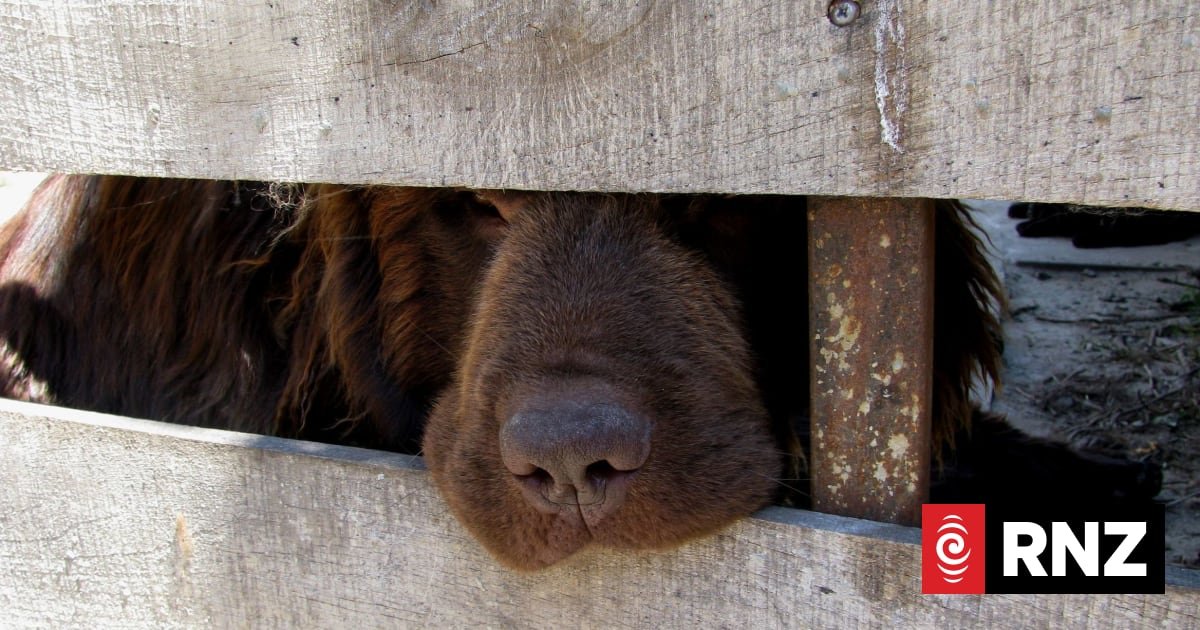
The government is looking to better equip animal welfare inspectors to penalise dog owners whose animals are harmed by prolonged confinement in crates or kennels.
The Associate Agriculture Minister responsible for animal welfare, Andrew Hoggard announced on Thursday the proposed regulation for SPCA animal welfare inspectors to be able to issue $500 infringement notices when they identified signs of harm from confinement.
That could include build-up of faeces or urine, enclosure-related injuries, muscle wastage or fly bite dermatitis.
Hoggard said these were signs the dog was not being well looked after.
Associate Agriculture Minister Andrew Hoggard. (File photo)
VNP/Louis Collins
“Dogs need exercise, company and room to move. When a dog is locked in a crate or kennel day after day with no break, it misses out on all of that, and it suffers,” he said.
“Those dogs can become anxious, fearful and aggressive. That’s bad for the dog, and it can put families, the public and other animals at risk too.”
The next tranche of work in this area regarding dogs, was seeking feedback on dog breeding, roaming dogs and commercial services like boarding kennels, walkers and groomers.
Hoggard said the confinement issue was raised by SPCA so that inspectors could respond immediately, as opposed to having to progress court proceedings which was a lengthy and complicated process.
He assured owners and farmers that kennelling dogs at night or for short periods was normal and responsible, and the rules would not change that.
“This is not targeting you,” he said.
“This is really for when these dogs are left in cages for really prolonged periods and you can see visible welfare deterioration of the animals.
“The main sort of culprit here, I believe, is some of these puppy mill-type places.”
Hoggard said SPCA and other animal rescue organisations were “quite keen” on seeing more regulations around dog breeding.
“There’s certainly been a number of examples of some pretty poor welfare happening where you’ve got these backyard breeders, so not your kennel club types.
“There are some pretty nasty backyard operations out there.”
He said it wanted to understand if people believed there needed to be more regulations or controls, and then focussing on where the harm was being caused.
SPCA received around 400 complaints about prolonged confinement in 2024/25, out of around 15,000 public complaints annually.
Under the Animal Welfare Act 1999 legislation sat codes of animal welfare which set minimum standards and recommended best practice guidelines for owners, but were not enforceable alone.
The codes were developed by the National Animal Welfare Advisory Committee (NAWAC) which advised the Minister on animal welfare issues.
Charitable trust SPCA was responsible and funded by Government specifically towards compliance and enforcement for companion animals like cats and dogs, while farmed and production animals fell into the Ministry for Primary Industries’ remit.
SPCA’s senior scientific officer, Marie McAninch said the codes of animal welfare for dogs, cats and rabbits, the most commonly owned pets in New Zealand, were all well overdue and in need of review.
“We’ve been really calling for those codes of welfare to be updated for some time,” she said.
“We’re really keen to make sure that our inspectors have the tools they need, and updating those close of welfare would be a really good start.
“But it doesn’t seem to be capacity in the system to actually update them.”
She said NAWAC had been directed to prioritise the codes for production animals like dairy cattle and sheep and beef, over companion animals, reflecting ongoing budget restraints.
“I think [NAWAC] are under pressure and I think resources really are stretched, and it’s probably across the public service as well,” she said.
“The issuing as codes of welfare slowed down massively over the last few years, and we would say that probably adding more resource to the system might help with this.”
McAninch said there had been a lot of news media recently around doggy day care and roaming dogs, issues that needed to be addressed.
Hoggard said he understood the dog code would be developed next year.
“A lot of work’s been done and so that frees up the focus now to start moving into the companion.
“They’ll be able to start that dogs code very shortly.”
When asked why production animals were prioritised over companion animals, Hoggard said code reviews had stalled, and farmers needed greater economic certainty.
But he said it was important all the codes would be completed.
“Simply because there was a hell of a lot of uncertainty out there in the farming sector around where these codes were at. We’re in a pretty not great space economically and we needed farmers to have certainty.
“Everything’s important, you know. I love my dog just as much as I love my cows, so I think there’s a process to work through.”
Welfare codes for deer and dairy were released recently, with the next expected to be sheep and beef, pigs and poultry.